


Executive Summary:
As global labor markets and employee expectations evolve, compensation and total rewards strategies are undergoing rapid transformation. New regulatory mandates, technological advancements, and cultural shifts are pushing organizations to rethink how they structure, manage, and communicate pay and benefits across regions. To attract and retain top talent in 2026, enterprises must balance transparency, equity, flexibility, and performance alignment, while also navigating diverse global requirements.
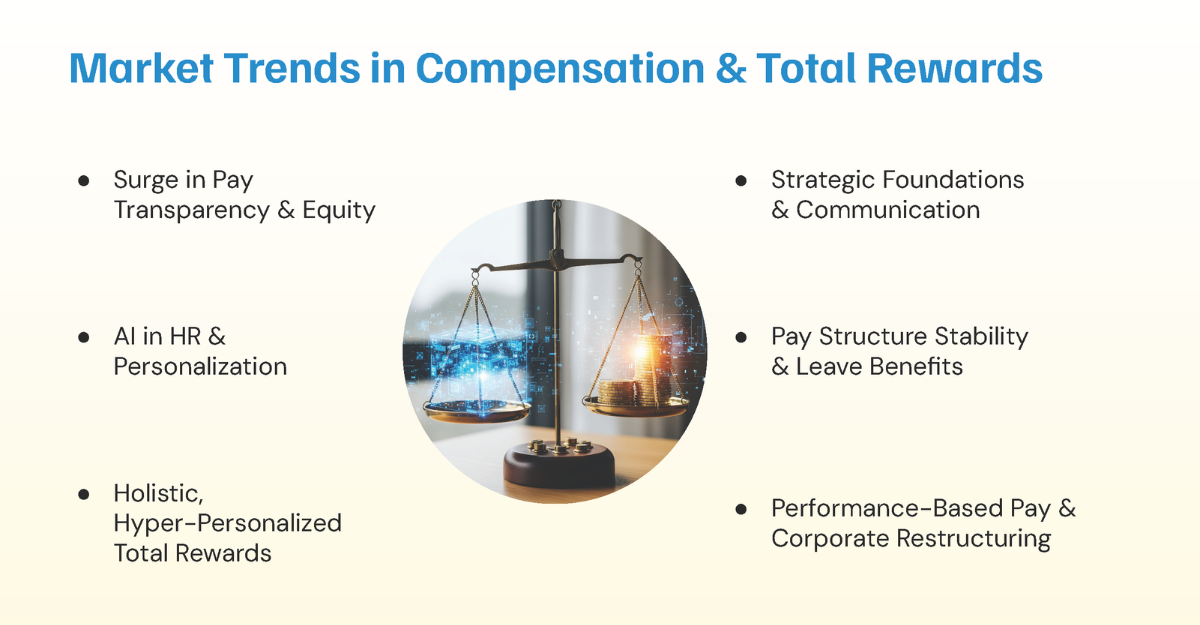
Six key trends are defining this landscape: the acceleration of pay transparency and equity legislation worldwide; the rise of artificial intelligence for benchmarking, scenario modeling, and personalization; growing demand for hyper-personalized rewards; the need for clearer communication between HR, managers, and employees; evolving global benefits and budget allocation strategies; and the expansion of performance-based pay structures across roles and regions.
Success requires regional sensitivity with varying legal frameworks, cultural norms, and cost-of-living considerations, all paired with a unified global strategy that reinforces fairness and compliance. Forward-looking organizations are shifting from reactive compliance to proactive strategic enablement, using data, analytics, and modern platforms to strengthen trust, engagement, retention, and competitive advantage.
HRSoft supports multinational enterprises with AI-enhanced analytics, transparency dashboards, global benefits delivery, and tools that directly connect performance to pay. By adopting modern compensation and total rewards strategies today, organizations can position themselves for sustained growth and leadership in an increasingly complex global market.
Read more about the top 6 trends that will impact compensation in 2026.
Introduction
The world of compensation and total rewards is evolving at an unprecedented pace. From shifting workforce expectations and regulatory changes to technological innovation, organizations must rethink how they design, deliver, and communicate pay and benefits across the globe.
For HR leaders worldwide, understanding these trends is essential. Organizations with a modern compensation strategy and a forward-looking total rewards strategy can attract, engage, and retain top talent, no matter what region of the world they are located.
At HRSoft, we see these changes/challenges as opportunities. Below, we outline six global trends shaping compensation and total rewards as we head into 2026, with actionable insights for multinational enterprises.
1. Pay Transparency and Equity Are Becoming Universal
Pay transparency is a global trend, with increasing legislative and cultural pressure in multiple regions. In Europe, countries like Germany, the U.K., and France have introduced pay reporting requirements to address wage gaps. In Asia-Pacific nations, such as Australia and New Zealand, transparency initiatives are encouraged to foster fair workplace practices.
For organizations, pay transparency goes beyond compliance. It builds trust, strengthens employer branding, and supports retention. Modern compensation strategies now integrate pay equity dashboards, enabling leaders to monitor gaps in real-time and make adjustments proactively.
Global Insight: Companies operating across multiple regions should tailor transparency and equity approaches to local norms and regulations. For instance, salary disclosure practices in Germany may differ from cultural expectations in Singapore or Brazil.
2. AI Reshapes Global Compensation Strategy
Artificial intelligence is transforming compensation strategy worldwide. AI accelerates salary benchmarking, models pay scenarios, and identifies potential equity gaps across diverse regions. Enterprises can simulate multiple compensation scenarios across countries, helping optimize budgets and maintain compliance with local regulations.
However, AI comes with risks. Historical bias in data can reinforce inequities if unchecked. A responsible approach combines AI insights with human oversight to ensure fairness, compliance, and ethical outcomes.
Total Rewards Strategy Insight: AI also enables personalized global benefits programs. Employees in different regions—from Europe to Asia—can access rewards tailored to local expectations and lifestyle needs.
3. Hyper-Personalized Total Rewards Programs
Employees worldwide expect more than a standard paycheck. Modern total rewards strategies focus on personalization, giving employees choice and flexibility:
- Flexible benefits wallets for healthcare, wellness, or commuter programs.
- Wellness initiatives, mental health support, and extended leave policies.
- Non-monetary rewards such as professional development, recognition, or flexible schedules.
In high-demand roles globally—tech in India, healthcare in Germany, or finance in Singapore—personalized total rewards are critical for attracting and retaining top talent. HRSoft provides tools to deliver these experiences at scale while keeping alignment with business objectives.
Global Insight: Consider regional cost-of-living differences and cultural expectations when designing rewards programs. Employees in Tokyo may value commuting support, while those in London prioritize pension and retirement benefits.
4. Strategic Alignment and Clear Communication
Modern compensation strategies must align rewards with business objectives across all regions. Managers need tools and guidance to explain pay decisions clearly, reinforcing transparency and trust across multinational teams.
Dashboards and analytics help HR leaders translate complex global pay decisions into clear, actionable messaging. Miscommunication can erode confidence, particularly in organizations with offices in multiple continents.
Total Rewards Strategy Insight: Clear communication ensures employees worldwide understand the full value of their rewards—salary, benefits, bonuses, and perks—driving engagement and loyalty.
5. Pay Structure Stability and Evolving Global Benefits
Global compensation budgets have stabilized, but deployment strategies are evolving. Enterprises increasingly allocate funds for mid-year adjustments or one-off increases to retain talent in competitive markets worldwide. Enterprises need compensation tools that manage international capabilities (note: not all compensation platforms have capabilities for international workforces).
Enhanced benefits are now central to a modern total rewards strategy, reflecting employee expectations beyond base pay. Examples include extended parental leave, wellness stipends, and mental health support.
Global Insight: Consider country-specific regulations. For example, France mandates 16 weeks of parental leave, while Japan recently increased childcare leave entitlements. Tailoring benefits globally ensures compliance and enhances employee satisfaction.
6. Performance-Based Pay and Global Compensation Restructuring
Performance-based pay is expanding beyond sales roles. Nearly a third of global organizations now link employee compensation to performance metrics, including multi-year tracking and scorecard-based incentives.
When combined with a strong total rewards strategy, performance-based pay motivates employees and ensures fairness across regions. Enterprises can design equitable pay structures that account for local labor markets, cost-of-living differences, and cultural expectations.
Global Insight: Multinational companies should adapt performance metrics to the regional context while maintaining global consistency in transparency and fairness.
Global Considerations for Multinational Enterprises
Implementing compensation strategies and total rewards strategies globally requires sensitivity to international differences:
- Europe: GDPR, pay reporting laws, and pension mandates influence compensation planning. The first EU Pay Directive compliance deadline begins in 2026.
- Asia-Pacific: Cultural preferences, statutory benefits, and labor laws vary widely between countries.
- North America: Federal, state, and provincial regulations impact pay transparency, leave, and benefits.
- Cross-Region Coordination: Multinational organizations must navigate currency fluctuations, tax laws, and local employment legislation to maintain fairness, consistency, and compliance.
Tailoring rewards by region while maintaining a coherent global strategy strengthens compliance, employee trust, and retention worldwide.
Looking Ahead: From Compliance to Strategic Advantage
The future of compensation and total rewards globally is strategic. Organizations that integrate compensation strategy with total rewards strategy across all regions will attract, engage, and retain top talent. Key practices include:
- Embedding pay transparency and equity in everyday processes globally.
Using AI responsibly for fairness and actionable insights. - Delivering hyper-personalized rewards experiences tailored to regional needs.
- Aligning compensation to business goals with clear, consistent communication worldwide.
- Maintaining agile budgets and off-cycle adjustments across markets.
- Linking pay to performance transparently and equitably in every region.
Compensation is no longer just a transactional function—it’s a driver of global business success. Companies that embrace these practices position themselves for long-term growth and market leadership.
How HRSoft Supports Global Enterprises
HRSoft enables multinational enterprises to implement modern compensation strategies and total rewards strategies worldwide:
- Real-time analytics and transparency dashboards for global offices.
- AI-driven insights with human oversight for ethical decisions.
- Hyper-personalized benefits delivery across diverse regions.
- Dashboards that align global rewards with organizational strategy and empower managers to communicate effectively.
- Directly links employee performance to compensation outcomes.
Take short, self-guided demos of HRSoft’s Global Compensation Management and Total Rewards products to see how HRSoft can help build confidence in your 2026 strategy and ensure your organization remains competitive, compliant, and employee-centric across the globe.